Have you ever told yourself, “I probably don’t need winter tires: I have AWD”?
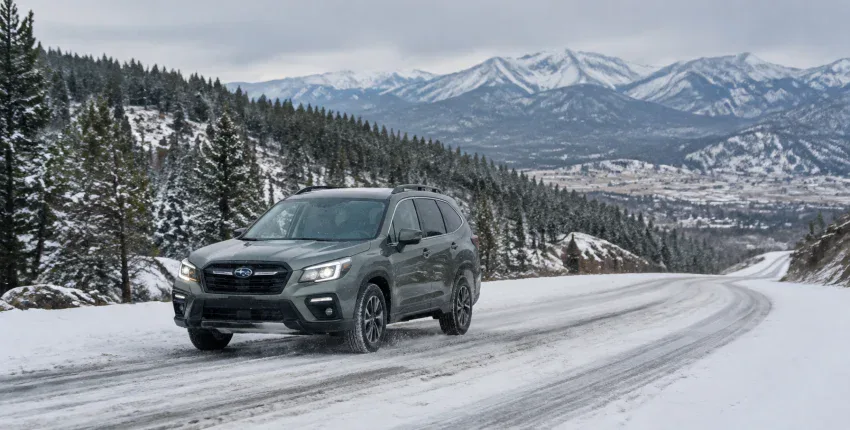
It is an understandable assumption. All-wheel drive can make a real difference when you are pulling away from a snowy intersection or climbing a slick road. But AWD does not give your tires extra grip when you need to stop or turn.
That distinction matters for drivers in Aurora and Denver, especially when a dry commute turns into icy side streets, black ice at an intersection, or a snowy drive toward I-70. AWD is helpful, but it is not a substitute for tires designed for cold-weather traction.
What AWD Can: and Cannot: Do
All-wheel drive sends engine power to multiple wheels instead of only the front or rear wheels. When one tire begins to slip during acceleration, the system can redirect power and help the vehicle move forward.
That is useful when:
- Pulling away from a stop in fresh snow
- Climbing a snowy driveway or hill
- Driving through slush on a mountain road
- Getting started on an icy road with limited traction
But acceleration is only one part of winter driving. Your AWD system does not create more friction between the tires and the road. When you press the brake pedal, the vehicle still depends on the four tire contact patches to slow down. When you turn, those same tires must provide the grip needed to follow the curve.
In other words, AWD can help you go, but it does not automatically help you stop or turn.
That is why an AWD SUV with worn all-season tires can still slide through a snowy intersection or lose control on a curve. The drivetrain may be working correctly, but the tires remain the limiting factor.
Why Winter Tires Grip Better in Colorado Cold
Winter tires are not simply all-season tires with a more aggressive tread pattern. They are designed with a different rubber compound, tread design, and internal construction for cold conditions.
Softer rubber stays flexible below about 45°F
As temperatures drop, many all-season and summer tire compounds become harder. A harder tire cannot conform as effectively to small irregularities in cold pavement, packed snow, or ice.
Winter tires use a softer cold-weather compound that stays more flexible below approximately 45°F. That flexibility helps the tread maintain contact with the road during cold mornings, freezing temperatures, and changing winter conditions.
This is important even when there is no snow on the ground. Aurora mornings can be well below freezing while major roads are mostly clear. The issue is not only visible snow: it is the temperature of the pavement and the traction available when you need to brake suddenly.
Deeper tread moves snow and slush
Winter tires typically use deeper tread blocks and patterns designed to move snow and slush away from the contact patch. That helps reduce the “snow-on-snow” loss of traction that can occur when a tire becomes packed with wet snow.
They also include more edges in the tread to help the tire grip packed snow. These features can make a noticeable difference on residential streets, neighborhood hills, and roads that have not been cleared as quickly as major highways.
Sipes create more biting edges
Sipes are the small cuts molded into the tread blocks. They open and close as the tire rolls, creating additional edges that can grip snow and improve traction on slippery surfaces.
The result is not magic, and no tire can make ice behave like dry pavement. Winter tires simply give your vehicle a better mechanical advantage in the conditions Colorado drivers regularly face.

The Stopping-Distance Difference Is the Part AWD Cannot Fix
A vehicle’s ability to accelerate does not tell you how well it can stop. This is where the AWD myth becomes a safety concern.
Depending on the tire, road surface, temperature, speed, and vehicle, winter tires can produce stopping distances that are roughly 20% to 30% shorter than comparable all-season tires in snow and cold-weather testing. The exact result varies, so no responsible shop should promise one number for every vehicle.
The difference can also be larger in severe conditions. For example, the Colorado Department of Transportation’s winter tire guidance illustrates a 60-mph stopping-distance comparison in which winter tires stopped in about 310 feet, while a non-mud-and-snow all-season tire took about 669 feet. Actual results depend on the vehicle and tires, but the message is clear: tire choice can affect how much road you need to stop.
AWD does not change the basic physics. Anti-lock brakes can help prevent wheel lockup, and electronic stability control can help manage a skid, but both systems still rely on the tires having usable traction.
If an intersection is coated with black ice, your AWD system cannot steer you around the car ahead. If a mountain curve is covered in packed snow, AWD cannot make an all-season tire behave like a winter tire.
Colorado’s Traction Law Does Not Exempt AWD Vehicles
It is also important to separate vehicle capability from legal compliance.
When Colorado’s Passenger Vehicle Traction Law is in effect, AWD or four-wheel-drive vehicles still need qualifying tires with at least 3/16-inch tread depth, or chains or an approved alternative traction device, depending on the law and conditions in effect.
The current CDOT Traction Law guidance lists qualifying options such as:
- Winter tires with the mountain-snowflake symbol
- Certain mud-and-snow tires marked M+S or M/S
- All-weather tires approved by the manufacturer
- Chains or an approved alternative traction device
An AWD badge by itself is not enough. Tires must meet the applicable requirements, and worn tread can leave you out of compliance even if the vehicle has a capable drivetrain.
CDOT can activate traction or chain requirements on state highways when conditions warrant. The I-70 mountain corridor is especially important for Aurora and Denver drivers traveling west, where weather can change rapidly between the Front Range and the passes. Check COtrip.org and posted highway signs before leaving.
Real-World Situations Around Aurora and Denver
Winter tire benefits are not limited to long mountain trips. Local driving can be just as demanding because conditions change quickly and streets are often a mix of wet pavement, packed snow, ice, and dry sections.
Icy intersections
Intersections collect water, slush, and tire-polishing from repeated traffic. When temperatures fall, those areas can become slick before the rest of the road looks dangerous.
Winter tires can provide more grip while braking and turning through the intersection. That may give you a better chance of stopping behind a vehicle or maintaining your intended path.
Residential side streets
Aurora neighborhood streets may not be cleared as quickly as major routes. Snow can become packed and polished by traffic, especially around stop signs, hills, and shaded areas.
A good set of winter tires can help with controlled starts and turns where all-season tires may spin or slide.
I-70 and mountain passes
Mountain driving adds grades, curves, changing elevations, and fast-moving weather. Even if the highway is clear near Denver, conditions can be very different near Georgetown, the Eisenhower-Johnson Memorial Tunnels, or higher passes.
Winter tires are worth serious consideration if you regularly ski, visit family in the mountains, commute west, or travel when road conditions are difficult to predict.
Who Should Consider Winter Tires?
Winter tires are not automatically necessary for every driver. Honest advice means considering how, where, and how often you drive.
They are a strong choice for drivers who:
- Travel to the mountains several times each winter
- Commute early in the morning before roads are treated
- Drive frequently on snowy or icy Aurora side streets
- Transport children or family members regularly
- Need dependable traction for work, medical appointments, or daily obligations
- Drive a rear-wheel-drive vehicle in frequent winter conditions
- Want the best possible braking and cornering performance in cold weather
A dedicated winter tire set also lets you keep your regular tires stored safely and avoid exposing all-season tires to months of harsh winter use.
When Good All-Season Tires May Be Enough
Some drivers can reasonably use high-quality all-season or all-weather tires, especially if they mostly drive in Aurora or Denver, avoid severe weather, have flexible schedules, and rarely travel into the mountains.
If that describes you, focus on the condition of your current tires. Check the tread depth, tire age, inflation pressure, and visible damage. A newer, properly maintained all-season tire with a suitable winter rating may be a practical choice for moderate Front Range driving.
Do not confuse “all-season” with “all-weather.” All-weather tires are designed and rated for more severe winter conditions than many traditional all-season tires. Look for the manufacturer’s markings and the mountain-snowflake symbol when comparing options.
If your tread is worn near Colorado’s 3/16-inch traction-law threshold, replacing the tires may be more urgent than debating tire categories. A worn tire of any type cannot deliver the performance it had when new.
Do Not Forget Alignment, Pressure, and Rotation
Winter tires work best when the rest of the vehicle is in good condition. Incorrect tire pressure can reduce traction and cause uneven wear, especially during Aurora’s temperature swings. Check pressure using the vehicle manufacturer’s recommended setting, not the maximum PSI printed on the tire sidewall.
A poor wheel alignment can also wear down a new set of winter tires prematurely. If your vehicle pulls to one side, the steering wheel sits crooked, or you notice uneven tread wear, schedule a wheel alignment inspection in Aurora.
Rotation matters as well. Following the tire manufacturer’s recommended rotation interval helps maintain more even tread wear, which is especially important when you depend on all four tires for winter traction.
Straightforward Winter Tire Advice from Value Tires & Service
At Value Tires & Service, we do not believe every driver needs the most expensive tire available. The right choice depends on your vehicle, driving habits, budget, and winter travel plans.
Our ASE-certified technicians serving Aurora can inspect your current tires, measure tread depth, check for uneven wear, and explain whether winter tires, all-weather tires, or your existing setup makes the most sense. We can also help with winter tire mounting, rotations, and alignment checks.
If you are searching for an affordable mechanic in Aurora who will give you a straightforward assessment instead of pushing an unnecessary purchase, bring us your questions. We are a family- and minority-owned shop focused on practical, honest service for local drivers.
AWD is useful: but it is only one part of winter safety. If you drive in frequent cold, snow, ice, or mountain conditions, winter tires can help your vehicle stop, turn, and remain controlled when AWD alone cannot.
Visit Value Tires & Service to schedule winter tire mounting, rotation, or a wheel alignment before the next storm. A little preparation now can help protect your family, your vehicle, and your budget all winter long.