Have you started hearing a faint squeal when you stop, but decided to wait until your next oil change to deal with it? That small noise may be your brake pads asking for attention before a routine replacement turns into a rotor and caliper repair.
Brake pads are designed to wear out. Calipers and rotors are not supposed to be replaced every time the pads need service. For drivers in Aurora and Denver, catching worn brake pads early is one of the simplest ways to protect stopping power and avoid a much larger repair bill.
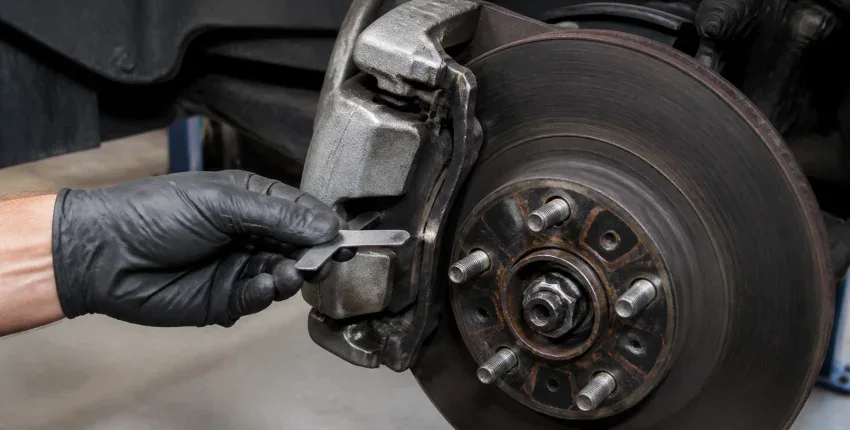
How Brake Pads, Rotors, and Calipers Work Together
Your vehicle’s disc brake system uses three main components to create friction:
- Brake pads: Friction material that presses against the rotor.
- Rotors: Flat metal discs attached to the wheel hub.
- Calipers: The housing that uses hydraulic pressure to press the pads against the rotor.
When you press the brake pedal, brake fluid sends pressure to the caliper piston. The piston pushes the inner brake pad toward the rotor, while the caliper body moves slightly to bring the outer pad into contact. The pads then clamp the spinning rotor and convert the vehicle’s motion into heat.
That friction is what slows the vehicle, but it also gradually wears away the pad material. A professional brake inspection checks how much friction material remains and whether the pads, rotors, calipers, and hardware are wearing evenly.
What Happens When Pads Wear Too Low?
The problem starts when drivers continue using brake pads after most of the friction material is gone. As the pad becomes thinner, the caliper piston must extend farther from its bore to keep the pad against the rotor.
A small amount of piston movement is normal. Excessive extension is not.
The piston can overextend
Inside the caliper, the piston normally operates within a protected area. When the pad wears extremely thin, the piston moves farther out than intended. This can expose more of the piston surface to moisture, dirt, and corrosion.
Colorado’s winter road salt and changing weather can make corrosion worse, especially on vehicles driven through snow, slush, and treated roads. Once corrosion develops near the piston or its seal, the piston may not retract smoothly.
The seal and dust boot can fail
A brake caliper has seals that keep brake fluid contained and a dust boot that helps protect the piston. A severely extended or corroded piston can damage these protective parts. When a technician later pushes the piston back during brake pad replacement, rust or pitting may tear the seal.
A damaged seal can allow brake fluid to leak. A torn dust boot can let in moisture and debris. Either issue may lead to a sticking piston or a caliper that no longer applies and releases pressure correctly.
The caliper can seize
A seized caliper may keep one brake pad pressed against the rotor even when you release the brake pedal. That creates constant friction and heat, which can cause:
- Uneven pad wear
- Burning smells near a wheel
- Reduced fuel economy
- Pulling to one side
- Rotor discoloration or warping
- Premature tire and suspension stress
In other cases, the piston may become too stuck to apply proper braking force. Either condition is a safety concern and requires more than simply installing new pads.
Metal-on-Metal Contact Damages the Rotor
If the friction material wears away completely, the metal backing plate can contact the rotor. This is commonly called metal-on-metal braking, and it is far beyond the point where brake pad replacement should have happened.
The backing plate can score deep grooves into the rotor and generate extreme heat. That damaged rotor may no longer provide a smooth, consistent braking surface. Depending on the severity, it may need to be machined or replaced.
Metal-on-metal contact can also damage the caliper. Excessive heat may harm the piston seal, and fragments from the worn pad can interfere with the caliper and hardware. In severe cases, the caliper piston can extend dangerously far or become damaged.
At that point, the repair may involve new brake pads, rotors, calipers, and related hardware instead of a straightforward brake pad replacement.
Warning Signs Your Brake Pads Are Getting Thin
Your vehicle often provides warnings before the pads reach the metal. Pay attention to changes in sound, pedal feel, and stopping performance.
Squealing or squeaking
Many brake pads include a metal wear indicator. When the friction material becomes thin, the indicator touches the rotor and creates a high-pitched squeal. This sound is a warning to schedule service soon: not an invitation to keep driving for several months.
Some squealing can result from dust, moisture, or pad material, so the sound alone does not confirm how much pad remains. An inspection can provide the answer.
Grinding
Grinding usually means the pads are worn through or a related brake component is making metal-to-metal contact. Continuing to drive with grinding brakes can quickly damage the rotors and increase the chance of caliper problems.
If your brakes are grinding, avoid unnecessary driving and arrange an inspection as soon as possible.
Pulsation or vibration
A pulsating brake pedal or steering wheel vibration during braking may point to uneven rotor thickness, excessive heat, or another brake issue. Rotors can develop problems after repeated overheating or after being damaged by worn pads.
A vibration does not automatically mean the rotors need replacement, but it should be measured rather than guessed at.
Longer stopping distance
If your car takes longer to stop than it used to, do not ignore the change. Worn pads, damaged rotors, a sticking caliper, old brake fluid, or other system problems can reduce braking performance.
This matters even more in Aurora and Denver, where snow, ice, heavy traffic, and sudden weather changes can leave you with less traction and less time to stop. Mountain driving can add additional heat and stress when descending grades.
Pulling or a burning smell
A vehicle that pulls left or right while braking may have uneven pad wear or a sticking caliper. A hot, chemical, or burning smell near one wheel can also indicate that a caliper is not releasing properly.
Both symptoms deserve prompt attention.

How Often Should Brake Pads Be Replaced?
There is no single mileage number that applies to every vehicle. Brake pads commonly last about 25,000 to 70,000 miles, but their service life depends on the vehicle, pad material, driving habits, traffic, terrain, and load.
A driver who spends most of the week on the highway may get more mileage from a set of pads than someone who makes frequent stops in city traffic. Rideshare drivers traveling around Aurora and Denver may experience faster wear because of repeated braking in traffic and frequent passenger pickups.
As a practical maintenance habit, have the brakes inspected at least once a year or around every 12,000 miles. A tire rotation, oil change, or other scheduled service can be a convenient time to request a brake check.
What Does “Too Low” Mean?
Brake pad thickness is measured by the amount of friction material remaining: not by the total thickness of the pad and its metal backing plate.
As a general guideline:
- Around 6 millimeters or more usually indicates useful material remains, though condition and wear pattern still matter.
- Around 3 millimeters is commonly considered a good time to plan replacement.
- Around 2 millimeters or less is too low to postpone, especially if wear is uneven.
- 1 millimeter or metal-on-metal means the pads are critically worn and the calipers and rotors should be inspected carefully.
Exact limits vary by vehicle and manufacturer. A professional technician should also check the inside and outside pads because one pad can wear much faster than the other when a piston, slide pin, or other component begins to bind.
The Cheaper Fix Is Usually the Earlier Fix
Replacing brake pads before they reach the backing plate is typically far less expensive than repairing the damage caused by ignoring them. A pad-only repair may cost several hundred dollars per axle depending on the vehicle and parts selected. Once worn pads damage the rotors and calipers, the total can rise to $1,000 or more on some vehicles.
That is not a quote for your specific car. Parts, labor, vehicle design, and the extent of the damage all affect the final price. The point is simple: replacing wear items while they are still doing their job is usually cheaper than replacing multiple damaged components afterward.
At Value Tires & Service, we believe an inspection should lead to a clear explanation: not pressure to approve work you do not need. Our brake and rotor service includes checking the pads, rotors, calipers, and brake system so you can understand what is urgent, what can wait, and what may be worth planning for later.
Brake Repair in Aurora, CO, Without the Upsell
When you need brake repair in Aurora, CO, you should be able to ask what your vehicle actually needs and receive a straight answer. Value Tires & Service is a family- and minority-owned shop serving local drivers with honest, affordable service.
Our ASE-certified technicians in Aurora inspect the complete brake system rather than automatically recommending the most expensive repair. We service all makes and models and focus on essential work such as brake pad replacement, rotor service, inspections, and related brake repairs.
If your pads are wearing normally, you may only need pads. If there is uneven wear, a seized piston, a torn boot, or a leaking caliper, we will explain why additional work is necessary and show you the condition that led to the recommendation.
Do Not Wait for Grinding
Brake pads are a maintenance item, but calipers and rotors can become expensive consequences of neglect. If you hear squealing, feel pulsation, notice longer stopping distances, or cannot remember the last time your brakes were inspected, it is worth checking them before the warning becomes metal-on-metal damage.
Schedule a brake inspection with Value Tires & Service in Aurora, call 303-552-3781, or book an appointment online. Our ASE-certified team will give you an honest assessment and help you take care of the cheaper fix before a worn brake pad turns into a full caliper job.